
How Much Synthetic Turf Do You Need? A Guide To Measuring Before You Order
September 30, 2026
Accurate measurements are one of the most important parts of any artificial turf project. If you order too little, you’ll be stuck waiting on a second shipment while your installation sits half finished, and if you order too much, you’ll be paying for extra synthetic grass that ends up rolled up in the garage or your workspace. Taking the time to measure your space carefully before placing an order saves money, keeps your timeline on track, and sets you up for a clean, professional-looking result. Here’s what you need to know before you order.
Start With the Right Tools
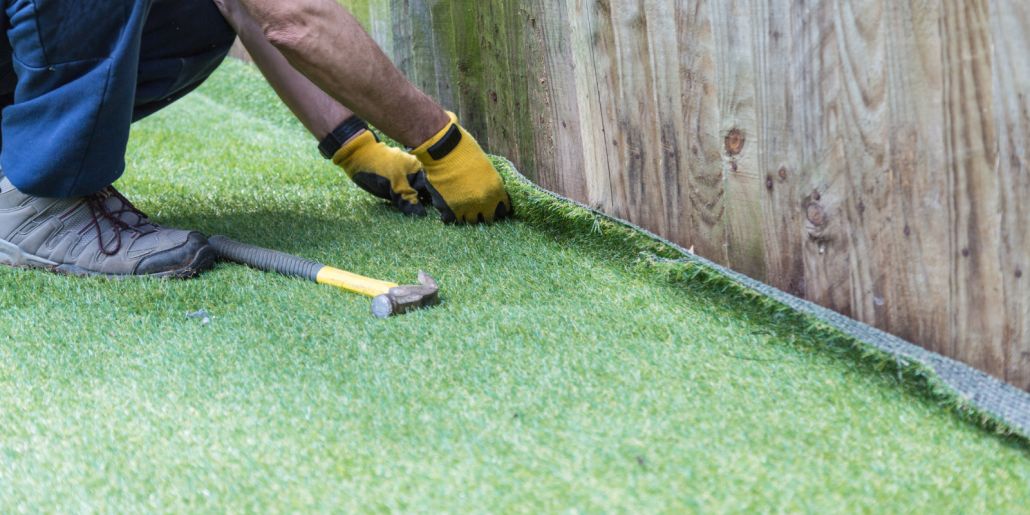
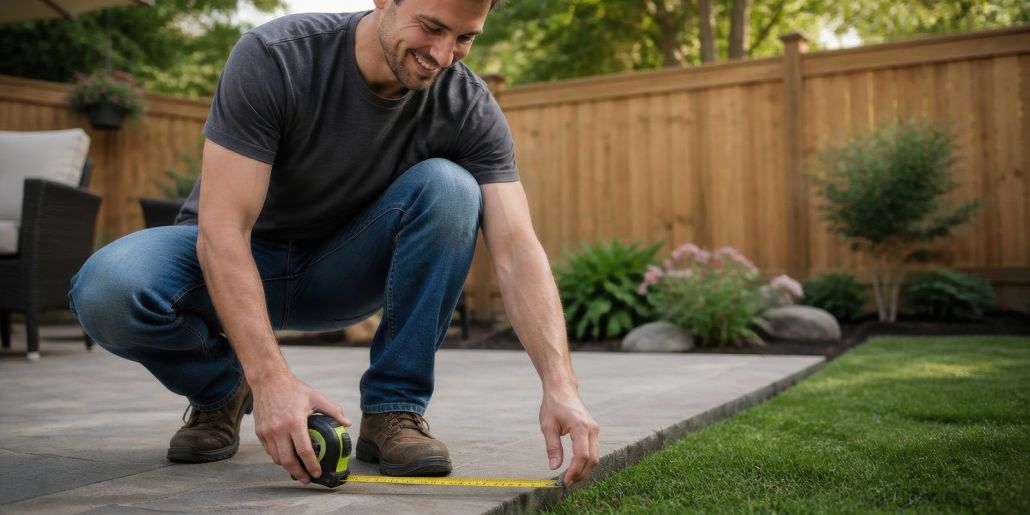
Before you head outside, gather a long tape measure (100 feet is ideal for larger yards), a notepad or graph paper, and a pencil. For bigger properties, a measuring wheel makes the job much faster. Stakes and string are also handy for marking straight lines across open areas, and having a second person on hand to hold the other end of the tape will make your measurements far more accurate.
Break Your Space Into Simple Shapes
Very few yards are perfect rectangles, so the easiest approach is to divide your space into smaller, simple shapes like squares, rectangles, and triangles. For rectangles and squares, multiply the length by the width. For triangles, multiply the base by the height and divide by two. Once you’ve measured each section, add them together to get your total square footage.
Curved areas and rounded garden beds are a little different. Since artificial grass is cut from rectangular pieces, it’s best to measure these sections at their longest and widest points as if they were rectangles. This way, you’ll have enough material to cut the curve cleanly without coming up short.
Plan Around Roll Widths
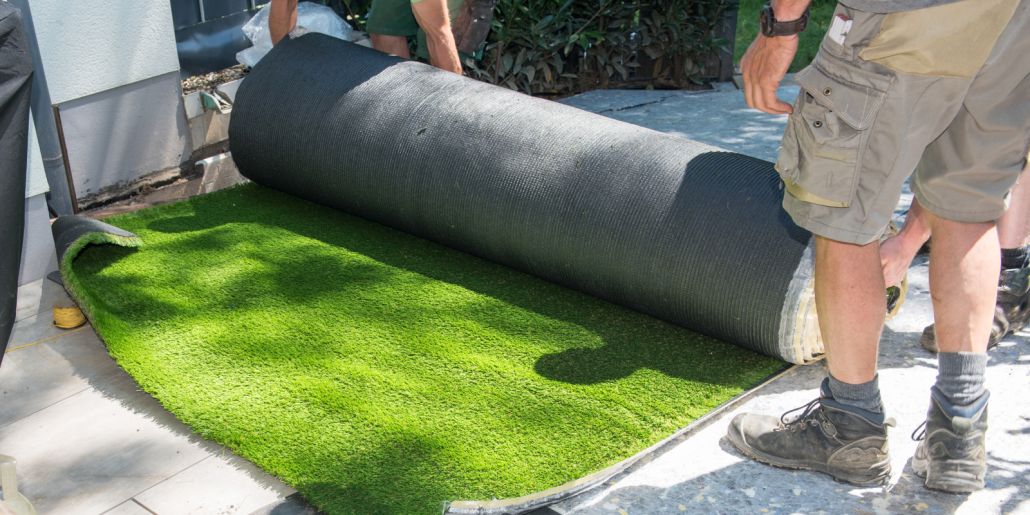
Total square footage is only part of the picture, because synthetic turf is sold in rolls with a fixed width — typically 15 feet — and cut to the length you need. The way your rolls are laid out can make a big difference in how much material you buy.
For example, a 20-by-30-foot area is 600 square feet. If you run 15-foot-wide rolls along the 30-foot side, two pieces cover the space almost perfectly. If you run them the other way, you’ll need rolls covering 30 feet of width, which means buying far more synthetic turf than you’ll use. Sketching your layout on paper before ordering helps you find the most efficient orientation.
It’s also important to keep the grain in mind. Every piece of artificial turf has a blade direction, and all pieces in your installation should face the same way so the lawn looks uniform. This means leftover scraps can’t be turned sideways to fill gaps, so plan your seams accordingly. Most installers point the blades toward the spot where the lawn is viewed most often, such as the back patio or a main window.
Add Extra for Trimming and Waste
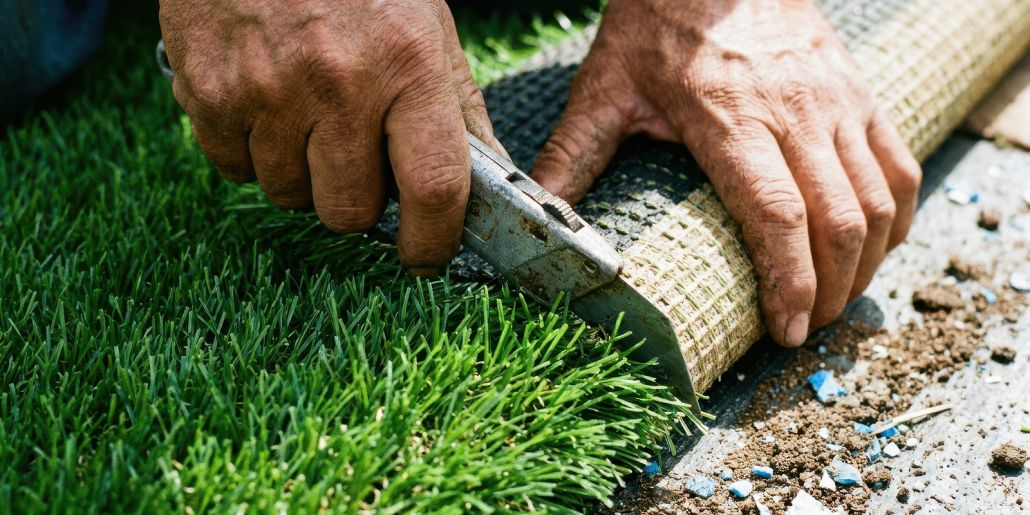
Once you have your numbers, add roughly 10% to your total to cover trimming along edges, seams, and any small mistakes during installation. Yards with lots of curves, trees, or planters may need a little more, while simple rectangular spaces may need a little less.
Don’t Forget the Installation Accessories
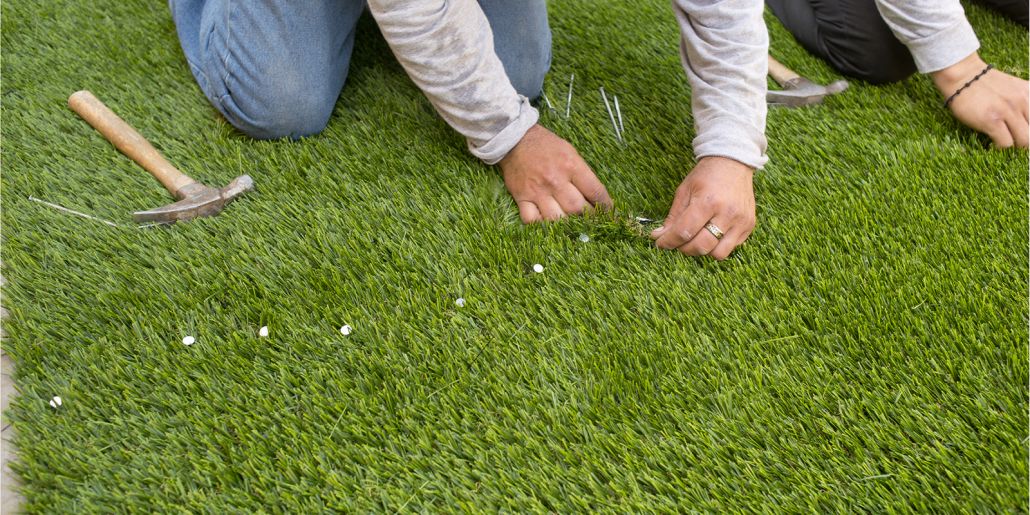
Your measurements also determine how much you’ll need of everything else. Base material is calculated by multiplying your square footage by the depth in feet and dividing by 27 to get cubic yards. Infill is usually measured in pounds per square foot, and the right amount varies by product. You’ll also want to measure the total length of your seams for seaming tape and adhesive, along with your full perimeter for edging and nails.
Order With Confidence From SGW
At Synthetic Grass Warehouse, our knowledgeable team is here to help you turn your measurements into an accurate order. Whether you’re planning a synthetic turf backyard, dog run, or custom putting green, bring us your sketch and we’ll help you choose the right products and quantities for your project. Contact your nearest SGW location today or request product free samples to get started.